
Kettlebell training, often delivered via convenient PDF programs, is gaining traction for efficient, full-body fitness. Many 12-week programs are available, suitable for all levels.
These workouts, even for beginners, effectively build muscle and burn fat, rivaling traditional weightlifting, and are easily accessible through downloadable PDF guides.
What are Kettlebells?
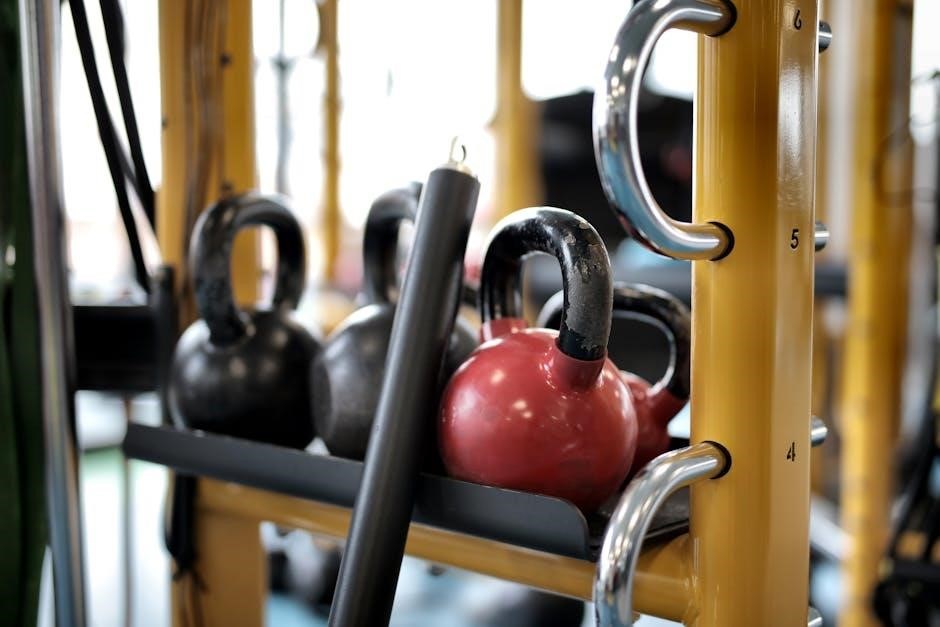
Kettlebells are cast-iron or steel weights resembling a cannonball with a handle, distinct from dumbbells due to their offset center of gravity. This unique design is central to the effectiveness of PDF-based kettlebell workouts.
Unlike traditional weights, kettlebells demand stabilization throughout movements, engaging more muscle groups simultaneously. Many PDF programs capitalize on this, offering full-body routines. The availability of structured PDF guides makes learning proper form accessible, even for beginners.
These programs often detail how the kettlebell’s shape facilitates dynamic exercises like swings and snatches, movements frequently highlighted in downloadable PDF plans. They’re a versatile tool, suitable for building strength, endurance, and improving cardiovascular health, all detailed within comprehensive PDF resources.
Benefits of Kettlebell Training
Kettlebell training, often accessed through convenient PDF workout plans, offers a multitude of benefits. It’s a fantastic tool for building strength, burning fat, and improving overall fitness – all achievable with structured PDF guidance.
These PDF programs emphasize functional movements, enhancing real-world strength and endurance. The dynamic nature of kettlebell exercises improves cardiovascular health, often surpassing traditional weightlifting, as detailed in many PDF resources.
Furthermore, PDF-based routines can be customized to various fitness levels, from beginners to advanced users. The humble kettlebell, despite its appearance, provides a challenging and rewarding workout, easily implemented using readily available PDF workout plans.
Kettlebell Workout Essentials
PDF kettlebell workouts require selecting the correct weight and mastering proper form. Prioritize technique before increasing weight, ensuring safety and maximizing results from PDF guides.
Choosing the Right Kettlebell Weight
Selecting the appropriate kettlebell weight is crucial, especially when following a PDF workout plan. Beginners should start lighter than anticipated, focusing on mastering technique before adding resistance. Many PDF programs suggest starting with a weight you can comfortably swing for 10-15 repetitions.
For men, a 16-24kg (35-53lbs) kettlebell is often a good starting point, while women may begin with 8-12kg (18-26lbs). Don’t be afraid to experiment! A PDF guide might offer weight recommendations based on your current fitness level.

Prioritize form over weight; it’s better to perform exercises correctly with a lighter kettlebell than struggle with a heavier one. As you progress through your PDF program, you can gradually increase the weight to continue challenging your muscles.
Proper Form and Technique
Mastering proper form is paramount when utilizing a PDF kettlebell workout. Incorrect technique can lead to injuries, negating the benefits. Many PDF guides emphasize the importance of a neutral spine, engaged core, and controlled movements throughout each exercise.
Before increasing weight, ensure you can execute each movement flawlessly. Utilize resources within your PDF – often including images or videos – to visualize correct form. Pay close attention to hip hinge mechanics during swings and maintain a stable base during squats.
Prioritize quality over quantity. If your form breaks down, reduce the weight or take a break. A well-structured PDF program will often include progressions to build strength and technique gradually.

Beginner Kettlebell Workout (PDF Focus)
PDF workouts offer structured routines for newcomers, often starting with foundational movements. These programs prioritize building a base strength and mastering technique safely.
Warm-up Exercises

Prior to beginning any PDF-based kettlebell workout, a dynamic warm-up is crucial for injury prevention and performance enhancement. This prepares your muscles and joints for the demands ahead.
Begin with 5-10 minutes of light cardio, such as jogging in place or jumping jacks, to elevate your heart rate. Follow this with dynamic stretches like arm circles, leg swings, and torso twists.
Include specific movements that mimic the workout, but at a lower intensity. For example, practice kettlebell swings without weight, or perform bodyweight squats. Focus on controlled movements and full range of motion. A proper warm-up significantly improves workout effectiveness and reduces the risk of strain.
Workout Structure: Sets and Reps
Most PDF kettlebell workout plans for beginners utilize a structure focused on building foundational strength and endurance. Typically, aim for 2-3 sets of 8-12 repetitions for each exercise. This rep range promotes muscle hypertrophy and improves technique.
Rest periods between sets should be between 60-90 seconds, allowing for adequate recovery while maintaining workout intensity. As you progress, indicated in more advanced PDF programs, you can increase the number of sets, reps, or decrease rest times.
Prioritize proper form over lifting heavier weights. Focus on controlled movements throughout each repetition. Listen to your body and adjust the sets and reps as needed, especially when following a new PDF program.
Core Kettlebell Exercises for Beginners
PDF kettlebell workouts for beginners commonly feature foundational movements. Kettlebell swings build explosive power and engage the posterior chain. Goblet squats improve lower body strength and core stability, offering a beginner-friendly squat variation.
Kettlebell deadlifts enhance hip hinge mechanics and strengthen the back. Kettlebell rows target the back muscles, promoting good posture. Overhead presses develop shoulder strength and stability, often modified for beginners.
Many PDF guides suggest starting with lighter weights and mastering form before increasing the load; These exercises, when performed correctly, provide a full-body workout and build a solid foundation for more advanced kettlebell movements.
Kettlebell Swings
Kettlebell swings, frequently detailed in PDF workout plans, are a dynamic exercise building explosive hip power. Proper form is crucial; initiate the movement with a hip hinge, not a squat. The kettlebell should swing from between the legs to chest height, maintaining a straight back.
PDF guides often emphasize engaging the glutes and core throughout the swing. Beginners should start with a lighter kettlebell, focusing on technique before increasing weight. Many programs recommend mastering the two-handed swing before progressing to the Russian or American swing variations.
Consistent practice, guided by a well-structured PDF, improves cardiovascular fitness and strengthens the posterior chain.
Goblet Squats
Goblet squats, a staple in many PDF kettlebell workouts, are excellent for building lower body strength and improving squat form. Hold the kettlebell close to your chest, like a goblet, while performing a squat. This position encourages a more upright torso, promoting proper technique.
PDF guides often highlight the importance of keeping your core engaged and back straight throughout the movement. Beginners may find this variation easier to control than traditional back squats. Programs typically suggest starting with a manageable weight and focusing on depth.
Regular practice, following a PDF plan, enhances leg strength, core stability, and overall squat mechanics.
Kettlebell Deadlifts
Kettlebell deadlifts, frequently featured in PDF workout plans, are a fantastic exercise for strengthening the posterior chain – your back, glutes, and hamstrings. Unlike barbell deadlifts, the kettlebell’s offset weight challenges core stability further.
Many PDF guides emphasize maintaining a flat back and engaging your lats throughout the lift. Beginners should start with a lighter weight, focusing on proper form to avoid injury. The kettlebell should remain close to the body during the entire movement.
Consistent practice, guided by a PDF program, builds strength, improves posture, and enhances overall functional fitness.
Kettlebell Rows
Kettlebell rows are a staple in many PDF-based kettlebell workouts, effectively targeting the back muscles and improving posture. These are often included in beginner programs due to their accessibility and effectiveness.
PDF guides typically demonstrate variations like the single-arm kettlebell row, emphasizing a strong core engagement to prevent rotation. Maintaining a flat back and pulling the kettlebell towards the ribcage are key form cues.
Progressive overload, as outlined in PDF plans, involves gradually increasing the kettlebell weight or reps. This builds strength and endurance, contributing to a well-rounded physique and improved functional movement.
Kettlebell Overhead Press
The kettlebell overhead press, frequently detailed in PDF workout plans, is a fantastic exercise for building shoulder strength and stability. Many beginner PDFs introduce this movement with lighter weights, focusing on proper technique.
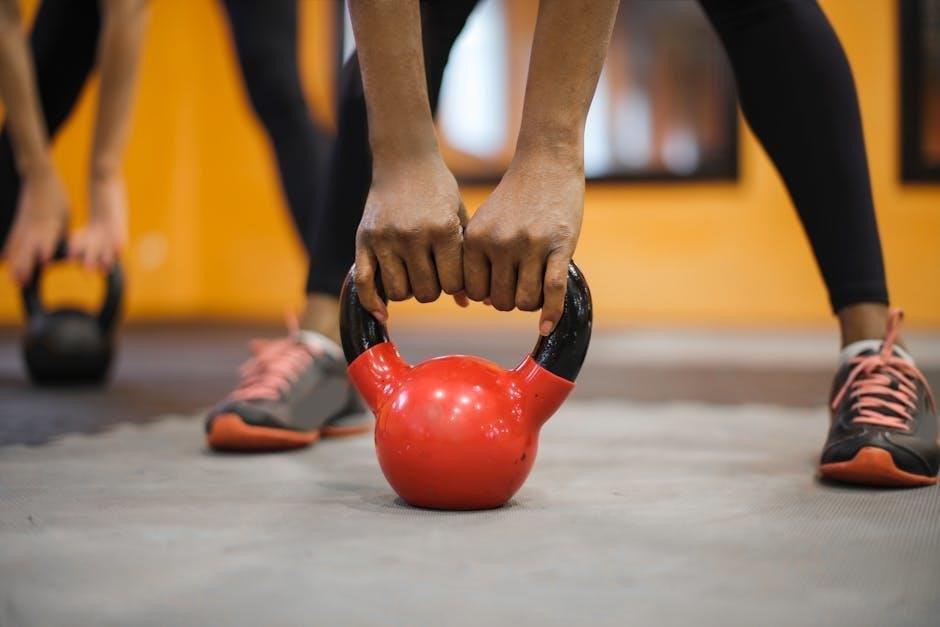
PDF guides emphasize the importance of a stable core and controlled movement, avoiding excessive back arching. The kettlebell should be pressed directly overhead, maintaining a straight line from wrist to shoulder.
As you progress, following a PDF program, you can increase the weight or incorporate variations like the push press for added power. This exercise contributes to overall upper body strength and improved athletic performance.

Intermediate Kettlebell Workout (PDF Progression)
PDF workouts for intermediate levels increase weight and complexity, introducing dynamic exercises like Turkish Get-Ups and Snatches for advanced strength gains.
Increasing Weight and Complexity
PDF-based intermediate kettlebell programs strategically elevate the challenge beyond beginner routines. This progression typically begins with a modest weight increase, ensuring continued proper form while demanding greater muscular effort.
Complexity is introduced through more dynamic movements, requiring enhanced coordination and stability. Expect to encounter exercises that combine multiple muscle groups and planes of motion.
Many PDF plans incorporate unilateral exercises – working one side of the body at a time – to address imbalances and further challenge core stability.
Careful attention to technique remains paramount; PDF guides often include detailed form cues and video links to support safe and effective progression.
Adding New Exercises
Intermediate PDF kettlebell workouts expand your repertoire beyond foundational movements. Introducing exercises like the Kettlebell Turkish Get-Up builds full-body strength, coordination, and stability – often detailed with step-by-step instructions in the PDF.
The dynamic Kettlebell Snatch, a more advanced lift, is frequently incorporated to enhance power and cardiovascular fitness. PDF resources will emphasize proper technique to prevent injury.
Expect variations on familiar exercises, such as single-arm swings or more complex squat patterns.
These additions aren’t random; they’re strategically chosen to target neglected muscle groups and challenge your body in new ways.
A well-designed PDF program will clearly outline exercise progressions and provide modifications for different fitness levels.
Kettlebell Turkish Get-Ups
The Kettlebell Turkish Get-Up is a complex, full-body exercise often detailed in intermediate PDF workout plans. It’s a fantastic movement for building strength, stability, and coordination. PDF guides typically break down the Get-Up into distinct stages, emphasizing controlled movements.
Starting lying down, you’ll press the kettlebell overhead and systematically rise to a standing position, maintaining a locked-out arm.
This exercise challenges core stability, shoulder strength, and mobility.
PDF resources will highlight common errors and provide scaling options, like using a lighter kettlebell or practicing individual components before attempting the full movement. Mastering this exercise requires patience and focus, but the benefits are substantial.
Proper form, as illustrated in the PDF, is crucial to avoid injury.
Kettlebell Snatches
Kettlebell Snatches are a dynamic, full-body exercise frequently incorporated into intermediate and advanced PDF kettlebell workout routines. These PDF plans often emphasize the importance of proper technique to maximize effectiveness and minimize risk of injury.
The snatch involves lifting the kettlebell from the ground to overhead in one fluid motion, requiring power, coordination, and flexibility. PDF guides typically detail the “hip hinge” and “pull-up” phases of the movement.
Beginners should start with lighter weights and focus on mastering the form before increasing the load. Many PDF resources offer drills to improve technique, such as high pulls and swings.
Consistent practice, guided by a well-structured PDF program, will build strength, power, and cardiovascular endurance.

Cool-down and Recovery
PDF kettlebell workouts often include dedicated cool-down sections with stretching. Prioritizing rest and recovery is crucial for muscle repair and preventing injury after training.
Stretching Exercises
PDF kettlebell workout plans frequently emphasize the importance of post-workout stretching to enhance flexibility and reduce muscle soreness. Common stretches include hamstring stretches, holding for 30 seconds each leg, to counter the demands of swings and deadlifts.
Quadriceps stretches, performed standing or lying down, are also beneficial. Shoulder and triceps stretches help alleviate tension from overhead presses and snatches. Don’t neglect hip flexor stretches, crucial after goblet squats.
Dynamic stretches, like arm circles and leg swings, can be incorporated into cool-downs for improved blood flow. Holding each static stretch for 20-30 seconds allows muscles to lengthen and recover effectively, minimizing post-exercise stiffness and promoting long-term joint health.
Importance of Rest
PDF kettlebell workout programs, even beginner-focused ones, demand adequate rest for optimal recovery and progress. Muscles rebuild and strengthen during rest, not during exercise. Overtraining can lead to injury and plateaus, hindering your fitness journey.
Schedule rest days between workouts, allowing your body to repair muscle tissue; Prioritize 7-9 hours of quality sleep each night to support hormonal balance and recovery processes. Active recovery, like light walking or yoga, can improve blood flow without stressing the muscles.
Listen to your body; don’t push through pain. Incorporating rest into your PDF plan isn’t weakness, it’s a strategic component for long-term success and sustainable fitness gains.

Finding and Utilizing PDF Kettlebell Workout Plans
PDF kettlebell workouts are readily available online, offering structured programs for all levels. Many free resources exist, alongside customizable plans to suit individual needs.
Resources for Free PDF Workouts
Finding free, quality PDF kettlebell workouts requires a bit of searching, but numerous resources exist online. Many fitness websites and blogs offer downloadable plans, often categorized by skill level – beginner, intermediate, and advanced. Look for reputable sources that emphasize proper form and technique to prevent injuries.
Several fitness professionals and trainers provide free introductory PDF workouts as lead magnets to attract clients. These often include a sample week or a short-term program. YouTube channels dedicated to kettlebell training frequently link to PDF guides in their video descriptions.
Be cautious when downloading PDFs from unfamiliar websites; ensure they are from trusted sources. Always review the workout plan thoroughly before starting, and consider consulting with a fitness professional if you have any concerns or pre-existing health conditions.

Customizing PDF Workouts to Your Needs
Downloaded PDF kettlebell workouts are excellent starting points, but tailoring them to your individual fitness level and goals is crucial. Don’t hesitate to modify sets, reps, or exercise selection based on your strength and endurance. Beginners might reduce the volume or choose simpler variations of exercises.
If a PDF program lacks sufficient warm-up or cool-down routines, supplement it with your own. Consider your available equipment; if you only have one kettlebell, adjust the workout accordingly. Listen to your body and prioritize proper form over completing every repetition.
Progressive overload is key – gradually increase weight or complexity as you get stronger. Customizing ensures the PDF workout remains challenging and effective for you, maximizing results and minimizing the risk of plateaus or injury.