
Malfunction: See Owner’s Manual ⏤ A Comprehensive Guide
Navigating car issues starts with understanding your vehicle’s documentation; a comprehensive owner’s manual is your first resource for troubleshooting and repair guidance.
Understanding the Importance of Your Owner’s Manual
Your owner’s manual isn’t just paperwork; it’s a vital guide to understanding your vehicle’s specific systems and features. Often overlooked, this document contains crucial information for safe operation, routine maintenance, and troubleshooting common issues. It details everything from basic controls to complex component explanations, tailored specifically to your car’s make and model.
Ignoring the manual means missing out on valuable insights that can prevent costly repairs and ensure your vehicle’s longevity. It’s the first place to turn when a warning light illuminates or an unusual noise arises, offering potential solutions before seeking professional help. Familiarizing yourself with its contents empowers you to be a more informed and proactive vehicle owner, ultimately saving you time and money.
Why Ignoring the Manual is a Common Mistake
Despite its importance, neglecting the owner’s manual is surprisingly common. Many new car owners assume modern vehicles are intuitive enough to operate without detailed instruction, or simply lack the time to read through the extensive documentation. This assumption can lead to preventable problems and unnecessary expenses.
Furthermore, the manual is often relegated to the glove compartment, forgotten until a serious issue arises. This reactive approach misses the preventative maintenance schedules and early warning signs detailed within. Ignoring the manual can result in improper vehicle operation, voided warranties, and escalated repair costs. Proactive reading empowers owners, while avoidance often leads to costly regrets.
Decoding Common Dashboard Warning Lights
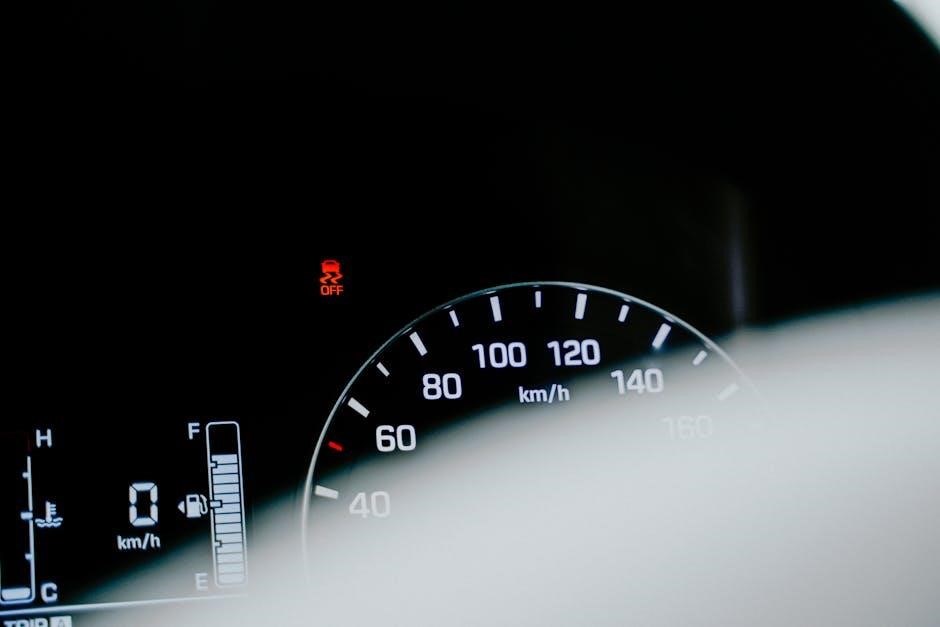
Dashboard warning lights are your vehicle’s way of communicating potential issues, but interpreting them correctly is crucial. Often, drivers react with panic, but the owner’s manual provides a clear explanation of each symbol’s meaning, ranging from minor concerns to critical malfunctions.
Ignoring these lights can exacerbate problems, leading to more significant and expensive repairs. The manual details the recommended course of action for each warning – whether it’s a simple fluid check or an immediate visit to a mechanic. Understanding these signals empowers you to address issues promptly and maintain vehicle safety and longevity.
Check Engine Light – Potential Causes
The dreaded check engine light illuminates for a vast array of reasons, ranging from a loose gas cap to serious engine problems. Your owner’s manual doesn’t necessarily pinpoint the exact issue, but it outlines common culprits and initial steps for diagnosis.
These can include a faulty oxygen sensor, catalytic converter issues, or problems with the ignition system. The manual emphasizes not ignoring the light, as prolonged driving with an underlying issue can cause further damage. It advises checking for obvious problems and consulting a professional for a proper scan and repair if the light persists.
Oil Pressure Warning Light – Immediate Action Required
The oil pressure warning light signals a critical issue: insufficient lubrication within the engine. Your owner’s manual stresses that this demands immediate attention to prevent catastrophic engine damage. Continuing to drive with low oil pressure can lead to severe wear and tear, potentially requiring a complete engine replacement.
The manual instructs you to safely pull over, turn off the engine, and check the oil level using the dipstick. If the level is low, carefully add oil according to the specified type. If the light remains on, or if you suspect a more serious problem, professional assistance is crucial – do not attempt to drive the vehicle.
Battery Warning Light – Diagnosis and Troubleshooting
A lit battery warning light often indicates a problem with the charging system, not necessarily the battery itself. Your owner’s manual details a systematic approach to diagnosis. First, check the battery terminals for corrosion and ensure they are securely connected. Then, consult the manual for the location of relevant fuses and inspect them for breaks.
The manual may suggest testing the alternator’s output voltage, a task best left to a professional if you’re unfamiliar with electrical systems. Ignoring this warning can lead to a complete battery discharge and leave you stranded. Refer to the manual’s troubleshooting section for specific guidance related to your vehicle model.
Temperature Warning Light – Preventing Engine Damage
The temperature warning light signals potential overheating, a critical issue demanding immediate attention. Your owner’s manual provides crucial steps to prevent severe engine damage. Immediately pull over to a safe location and turn off the engine. Do not attempt to open the radiator cap while the engine is hot – severe burns can occur.
Consult the manual to locate the coolant reservoir and check the coolant level. If low, carefully add the correct type of coolant (specified in the manual). If the light persists, or if you notice steam, do not drive the vehicle; towing is necessary. Ignoring this warning can lead to costly engine repairs or complete failure.
Troubleshooting Basic Malfunctions Using the Manual
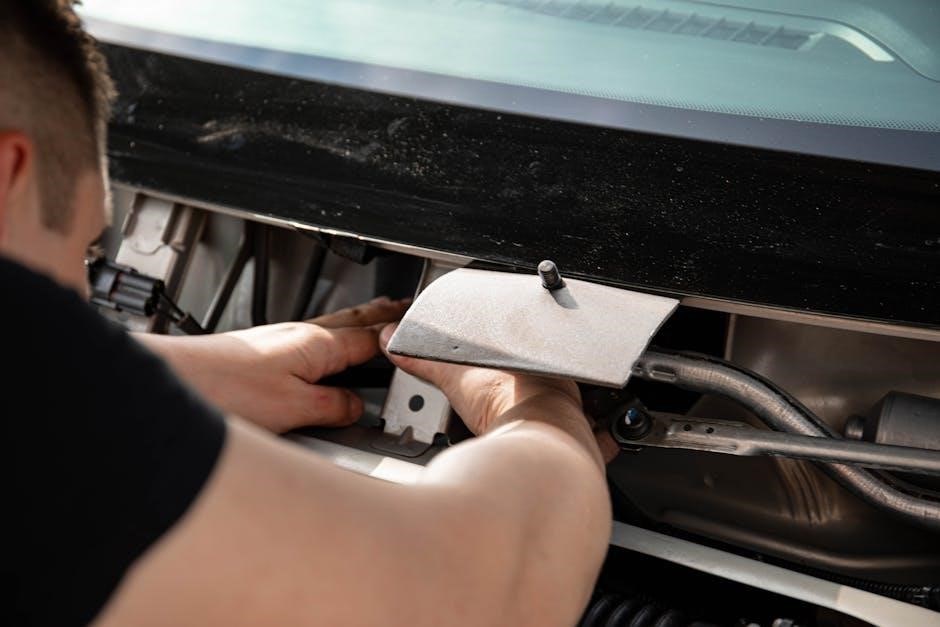
Your owner’s manual empowers you to address minor vehicle issues independently, saving time and money. It details procedures for common problems like jump-starting a dead battery – always referencing the manual for specific terminal locations and safety precautions.
Changing a flat tire is another skill the manual guides you through, outlining proper jacking points and lug nut tightening sequences. Furthermore, it explains how to check and add essential fluids like oil, coolant, and windshield washer fluid, ensuring optimal vehicle performance. Remember, the manual provides tailored instructions for your specific vehicle model.
Jump Starting Your Vehicle (Refer to Manual for Specifics)
A dead battery can strand you, but jump-starting is often a straightforward fix – when done correctly. Your owner’s manual is crucial here, as vehicle layouts vary. It precisely indicates the battery’s location and, critically, the correct terminals for connecting the jumper cables (positive to positive, negative to ground).
Incorrect connections can damage your vehicle’s electrical system. The manual also details the recommended sequence for connecting and disconnecting cables, and any specific warnings for your model. Always consult it before attempting a jump start to avoid potential hazards and ensure a safe, successful outcome.
Changing a Flat Tire – Step-by-Step Guide (Manual Variations)
Dealing with a flat tire requires preparedness and knowing the proper procedure, and your owner’s manual provides a vehicle-specific guide. It details the location of the spare tire, jack, and lug wrench – these can differ significantly between models.
The manual outlines the step-by-step process, including loosening lug nuts before jacking, proper jacking points to avoid damage, and the correct tightening sequence. Variations exist; some manuals illustrate specific tools or recommend using torque wrenches. Always prioritize safety and refer to your manual for the precise instructions tailored to your vehicle, ensuring a secure tire change.
Checking and Adding Fluids – Oil, Coolant, Washer Fluid
Maintaining optimal fluid levels is crucial for vehicle health, and your owner’s manual details how to check and replenish these essential substances. It specifies the correct type of oil, coolant, and washer fluid for your vehicle, preventing damage from incompatible products.
The manual illustrates the location of dipsticks and reservoirs, explaining how to accurately read levels. It also provides guidance on safe coolant handling and proper filling procedures. Always consult your manual before adding fluids, as incorrect levels or types can lead to serious mechanical issues. Regular checks, guided by the manual, ensure reliable performance.
Specific Malfunctions Addressed in Most Owner’s Manuals
Owner’s manuals frequently dedicate sections to common, non-critical malfunctions owners might encounter, empowering them to attempt simple fixes before seeking professional help. These often include issues with power windows – resetting mechanisms or identifying potential fuse problems – and troubleshooting door lock malfunctions, covering both key fob and manual operation.
Windshield wiper problems are also commonly addressed, with instructions for checking fuses and, in some cases, replacing wiper blades. These sections aim to provide accessible solutions, reducing reliance on immediate mechanic visits for minor inconveniences. Referencing the manual first can save time and expense.
Power Window Issues – Resetting and Repair
Many power window malfunctions stem from a lost connection or a reset requirement after a battery disconnection. Owner’s manuals typically detail a “window reset” procedure, often involving holding the window switch in a specific position for several seconds after reconnecting the battery.
This re-establishes communication with the window motor. If resetting doesn’t resolve the issue, the manual will guide you through checking the relevant fuse. More complex problems, like motor failure, usually necessitate professional diagnosis, but the manual provides a starting point for basic troubleshooting and identification.
Door Lock Problems – Key Fob and Manual Operation
Door lock issues can range from key fob malfunctions to problems with the manual locking mechanism. Your owner’s manual provides crucial guidance for both scenarios. It details key fob battery replacement procedures and often includes instructions for re-syncing the fob to the vehicle’s security system if it stops working.
For manual locks, the manual illustrates the correct operation and potential troubleshooting steps. It may also address issues with the child safety locks. If problems persist, the manual directs you to check related fuses before seeking professional assistance, saving time and potential costs.
Windshield Wiper Malfunctions – Fuse Checks and Replacement
Windshield wiper issues, from slow operation to complete failure, are common malfunctions addressed in your owner’s manual. A primary troubleshooting step involves checking the fuse dedicated to the wiper motor. The manual provides a fuse box diagram, clearly identifying the correct fuse location for your vehicle’s specific model and year.
It details the fuse amperage and type required for replacement. If the fuse is blown, replacing it is often a simple DIY fix. However, the manual cautions against repeatedly replacing fuses without diagnosing the underlying cause, as this could indicate a more serious electrical problem requiring professional attention.
Understanding the Manual’s Maintenance Schedule
Your owner’s manual isn’t just for fixing problems; it’s a proactive guide to preventing them through a detailed maintenance schedule. This schedule outlines essential services, categorized by mileage or time intervals, to keep your vehicle running smoothly and reliably. Ignoring this schedule can lead to premature wear, decreased performance, and potentially costly repairs down the road.
The manual specifies oil change intervals, tire rotation frequencies, and fluid flush recommendations. It also details inspections for critical components like brakes, belts, and hoses. Adhering to the recommended schedule is crucial for maintaining your vehicle’s warranty and maximizing its lifespan.
Oil Change Intervals – Based on Mileage and Usage

Determining the correct oil change interval is vital for engine health, and your owner’s manual provides specific guidance. Intervals aren’t solely based on mileage; they also consider driving conditions. “Normal” driving includes typical commutes, while “severe” conditions – frequent short trips, towing, or extreme temperatures – necessitate more frequent changes.

The manual will list both mileage (e.g., 5,000 or 10,000 miles) and time-based (e.g., every 6 or 12 months) recommendations. Always prioritize the interval that occurs first. Using the correct oil type, as specified in the manual, is equally important for optimal engine performance and longevity.
Tire Rotation and Alignment – Extending Tire Life

Your owner’s manual details the recommended tire rotation pattern and frequency, crucial for even wear and maximizing tire lifespan. Rotation involves changing the position of each tire to distribute wear across all four. The manual will specify patterns like front-to-back or cross-rotation, depending on your vehicle’s drive type.
Alongside rotation, the manual outlines when to check wheel alignment. Misalignment causes uneven tire wear and can affect handling. Symptoms include pulling to one side or uneven tread wear. Regular alignment checks, as per the manual’s schedule, contribute significantly to tire longevity and vehicle safety.
Fluid Flush Recommendations – Transmission, Brake, and Coolant
The owner’s manual provides a vital maintenance schedule outlining when to flush critical vehicle fluids – transmission, brake, and coolant. These flushes remove old, contaminated fluid and replenish with fresh fluid, ensuring optimal system performance and preventing costly damage.
The manual specifies intervals based on mileage or time, often differing based on driving conditions. Ignoring these recommendations can lead to transmission issues, reduced braking efficiency, or overheating. Following the manual’s guidance protects these essential systems, extending their lifespan and maintaining vehicle reliability. Consult your manual for fluid type specifications too!
Locating Information Within Your Owner’s Manual
Effectively using your owner’s manual hinges on quickly finding the information you need when a malfunction arises. Most manuals feature a detailed index and table of contents, acting as a quick reference guide to pinpoint specific topics and page numbers.
Don’t overlook the value of diagrams and illustrations; these visual aids often simplify complex troubleshooting steps. Familiarize yourself with the manual’s organization to swiftly locate relevant sections. A well-structured manual empowers you to self-diagnose issues and perform basic maintenance, saving time and potential repair costs.
Index and Table of Contents – Quick Reference Guide
The index and table of contents are the cornerstones of efficient information retrieval within your owner’s manual. A comprehensive index lists keywords and topics alphabetically, directing you to precise page numbers for specific malfunctions or features. The table of contents provides a structured overview of the manual’s chapters and sections.
Mastering these tools allows for rapid navigation, bypassing lengthy searches. When facing an unfamiliar issue, start with the index; if unsure of the exact terminology, the table of contents offers a broader perspective. Utilize both to quickly access relevant guidance and address vehicle concerns effectively.
Diagrams and Illustrations – Visual Troubleshooting
Owner’s manuals frequently incorporate diagrams and illustrations to enhance understanding and simplify complex procedures; These visuals are invaluable for visual learners and can clarify steps that written instructions alone might obscure, particularly when dealing with vehicle malfunctions.
Detailed schematics of components, exploded views of assemblies, and step-by-step illustrated guides are common features. They aid in identifying parts, understanding their relationships, and correctly performing maintenance or repairs. Leverage these visual aids to confidently tackle troubleshooting, ensuring accurate execution and minimizing potential errors.

Digital Owner’s Manuals – Accessibility and Features
Modern vehicle ownership increasingly includes access to digital owner’s manuals, offering enhanced accessibility and a range of convenient features. These electronic versions often surpass traditional printed manuals in usability and searchability, providing immediate access to vital information when addressing vehicle malfunctions.

Downloading manuals onto smartphones or tablets allows for on-the-go reference. Interactive features, like zoom capabilities for detailed diagrams, and hyperlinked indexes streamline navigation. The integrated search functionality quickly locates specific topics, saving valuable time during troubleshooting. Digital formats also facilitate easier updates and revisions, ensuring owners have the most current information.
Downloading and Using Digital Manuals on Mobile Devices
Accessing your vehicle’s owner’s manual via a mobile device provides unparalleled convenience when facing a malfunction. Most manufacturers offer downloadable apps or PDF versions compatible with smartphones and tablets, enabling instant access to troubleshooting guides and maintenance schedules.
Downloading typically involves visiting the manufacturer’s website or utilizing an app store. Once installed, manuals can be accessed offline, crucial when dealing with issues in areas with limited connectivity. Utilizing the device’s search function quickly locates specific information, while the portability allows for immediate reference during roadside incidents or while performing basic repairs.
Search Functionality – Finding Information Quickly
Digital owner’s manuals excel in their ability to swiftly pinpoint relevant information when a malfunction arises. Unlike flipping through pages, a robust search function allows users to type in keywords – like “check engine light” or “flat tire” – and instantly locate corresponding sections.
This feature is invaluable when time is of the essence, or when attempting a repair without prior experience. Boolean operators (AND, OR, NOT) can refine searches for even greater accuracy. Many digital manuals also feature hyperlinked cross-references, enabling seamless navigation between related topics, accelerating the troubleshooting process and minimizing frustration.
When the Manual Isn’t Enough – Seeking Professional Help
Despite a thorough owner’s manual review, some malfunctions demand the expertise of a qualified mechanic. Recognizing your limitations is crucial; attempting complex repairs beyond your skill level can exacerbate the problem and potentially create safety hazards.
Symptoms like persistent warning lights, unusual noises, or significant performance issues warrant professional diagnosis. Prioritize finding a reputable mechanic with relevant certifications (ASE, for example) and positive customer reviews. A skilled technician possesses specialized tools and knowledge to accurately identify and resolve intricate automotive issues, ensuring your vehicle’s safe and reliable operation.
Recognizing When a Repair is Beyond Your Skill Level
Successfully diagnosing a car problem doesn’t automatically equate to the ability to fix it. Certain repairs require specialized tools, extensive automotive knowledge, and a deep understanding of complex systems. If a task involves engine internals, transmission work, or advanced electrical diagnostics, it’s best left to professionals.
Hesitate before tackling repairs if the owner’s manual instructions are unclear, or if you feel uncomfortable with any step. Ignoring warning signs or proceeding without confidence can lead to further damage and costly mistakes. Prioritize safety and vehicle integrity – knowing your limits is a sign of responsible car ownership.
Finding a Reputable Mechanic – Certification and Reviews
When professional help is needed, selecting a trustworthy mechanic is crucial. Look for certifications like ASE (Automotive Service Excellence) – a hallmark of skilled and knowledgeable technicians. These credentials demonstrate a commitment to ongoing training and industry standards.
Don’t solely rely on advertising; explore online reviews from multiple sources (Google, Yelp, Better Business Bureau) to gauge customer experiences. A pattern of positive feedback regarding quality of work, honesty, and communication is a good sign. Ask friends, family, or online car communities for recommendations – word-of-mouth referrals are often invaluable.
The Role of the Manual in Maintaining Your Vehicle’s Warranty
Your owner’s manual is intrinsically linked to your vehicle’s warranty protection. Manufacturers stipulate specific maintenance schedules – oil changes, fluid flushes, inspections – that must be followed to maintain warranty coverage. Deviating from these recommendations can void your warranty if a related issue arises.
Meticulously document all repairs and maintenance performed, including dates, mileage, and services completed. Keep receipts and records readily available. The manual outlines what’s covered and for how long, providing a clear understanding of your rights and responsibilities. Adhering to the manual safeguards your investment and ensures warranty claims are honored.
Following Recommended Maintenance to Avoid Warranty Issues
Strict adherence to the maintenance schedule detailed in your owner’s manual is paramount for preserving your vehicle’s warranty. Manufacturers define specific intervals for services like oil changes, filter replacements, and fluid flushes. Neglecting these, or performing them incorrectly, provides grounds for denying warranty claims.
Using non-approved parts or fluids can also invalidate coverage. The manual specifies acceptable standards. Keep detailed records – receipts, dates, mileage – as proof of compliance. Proactive maintenance, as outlined, demonstrates responsible ownership and strengthens your position should a warranty dispute arise, protecting your investment.
Documenting Repairs and Maintenance for Warranty Claims
Meticulous record-keeping is crucial when it comes to warranty protection. Every repair, whether performed by yourself or a professional mechanic, should be documented with a detailed receipt. Include the date, mileage, a description of the work completed, and parts used.
Maintain a dedicated file – physical or digital – for all vehicle maintenance records. This provides concrete evidence of adherence to the owner’s manual’s recommendations. Should a warranty claim become necessary, these documents will be invaluable in substantiating your case and ensuring a smooth resolution process, safeguarding your financial interests.
Resources Beyond the Owner’s Manual
While the owner’s manual is a primary source, a wealth of supplementary resources exists for vehicle troubleshooting and repair. Online forums dedicated to specific car makes and models offer a platform for sharing knowledge and experiences with fellow owners. Vehicle-specific repair websites provide detailed instructions, often accompanied by helpful videos, guiding you through complex procedures.
These external resources can offer alternative perspectives, clarify ambiguous instructions, and provide solutions to problems not explicitly addressed in the manual. However, always verify information from these sources before implementing any repairs, prioritizing safety and accuracy.
Online Forums and Communities – Sharing Knowledge and Experiences
Vehicle-specific online forums are invaluable resources, fostering a collaborative environment where owners share troubleshooting tips, repair experiences, and diagnostic insights. These communities often contain threads addressing common malfunctions, offering diverse solutions and perspectives beyond the owner’s manual.
Members frequently post detailed repair logs, photos, and videos, providing practical guidance. Engaging with these forums allows you to learn from others’ mistakes, gain confidence in tackling repairs, and potentially avoid costly professional services. Remember to critically evaluate advice and prioritize safety when implementing solutions found online.
Vehicle-Specific Repair Websites – Detailed Instructions and Videos
Beyond general automotive advice, numerous websites specialize in repair information for specific makes and models, offering a deeper dive into potential malfunctions. These platforms often provide step-by-step instructions, accompanied by high-quality photographs and detailed videos, demonstrating repair procedures.
Many sites categorize issues by symptom, making diagnosis easier. Premium subscriptions may unlock access to wiring diagrams, technical service bulletins, and advanced troubleshooting guides. While incredibly helpful, always verify information and prioritize safety; these resources supplement, but don’t replace, a thorough understanding of your vehicle and its owner’s manual.