
Amana Dishwasher User Manual: Comprehensive Guide
This comprehensive guide details installation‚ operation‚ maintenance‚ and troubleshooting for your Amana dishwasher‚ ensuring optimal performance and longevity.
Welcome to the world of convenient dishwashing with your new Amana dishwasher! This appliance is designed to provide reliable and efficient cleaning‚ saving you time and effort in the kitchen. Before you begin‚ please take a moment to familiarize yourself with this user manual. It contains vital information regarding safety precautions‚ proper operation‚ and maintenance procedures.
Keeping this manual readily available will ensure you can quickly address any questions or concerns that may arise during the lifespan of your dishwasher. Remember to retain it should you ever sell or relocate the appliance‚ allowing the next owner to benefit from its guidance. Amana dishwashers are built for durability‚ and with proper care‚ will deliver years of sparkling clean dishes.
Safety Precautions

Your safety is paramount! Before operating your Amana dishwasher‚ carefully review these crucial safety precautions. Always ensure the appliance is properly grounded via a three-prong outlet to prevent electrical shock. Never attempt to repair the dishwasher yourself; contact a qualified technician for service.
Keep children and pets away from the dishwasher during operation‚ as the interior surfaces can become hot. Avoid storing flammable materials near the appliance. When loading dishes‚ be mindful of sharp objects to prevent injuries. Disconnect the power supply before performing any maintenance or cleaning. Improper installation or use can lead to hazards; adhere strictly to the provided instructions. Prioritize safety for a worry-free dishwashing experience.
Dishwasher Parts Identification
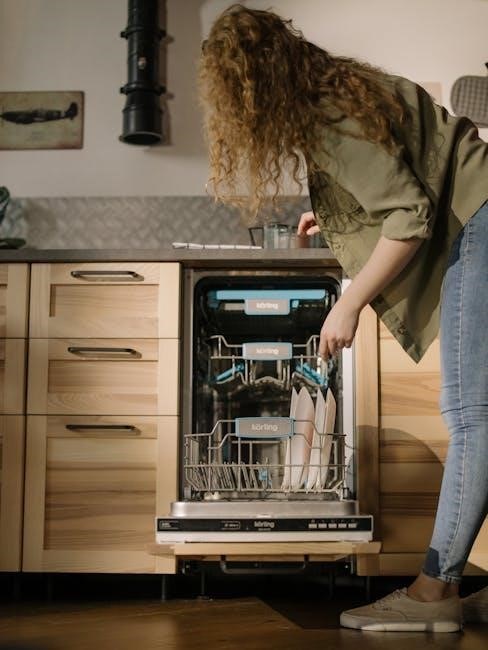
Familiarize yourself with your Amana dishwasher’s components! Key parts include the upper and lower spray arms‚ responsible for water distribution. Locate the filter system‚ crucial for trapping food particles. Identify the detergent dispenser and rinse aid compartment for optimal cleaning.
The interior rack system features adjustable tines for versatile loading. Understand the function of the door latch and hinge assembly. Note the position of the control panel‚ displaying cycle selections and options. The water inlet valve controls water flow‚ while the drain pump facilitates water removal; Recognizing these parts aids in maintenance and troubleshooting‚ ensuring efficient operation and extending the dishwasher’s lifespan.
Getting Started
Prepare for seamless operation! This section covers initial setup‚ connecting water and drain lines‚ and ensuring proper electrical grounding for your Amana dishwasher.
Initial Setup and Installation
Before you begin‚ carefully unpack your new Amana dishwasher and inspect it for any shipping damage. Ensure all components are present‚ referencing the included parts list. Position the dishwasher in its designated space‚ allowing for proper ventilation and access to water and drain connections‚ as well as electrical outlets.
Leveling is crucial for optimal performance. Utilize the adjustable feet to ensure the dishwasher sits evenly on the floor‚ preventing rattling and ensuring proper water drainage. Consult the detailed installation manual (EGHW100DC3) for step-by-step instructions and diagrams. Remember to keep this manual readily available for future reference‚ especially if the appliance is moved or sold.
Proper installation guarantees efficient operation and prevents potential issues.
Connecting Water Supply & Drain Hose
Connect the water supply line to the dishwasher’s inlet valve‚ ensuring a tight‚ leak-proof connection. Use new supply hoses and avoid reusing old ones to prevent potential failures. The installation manual (EGHW100DC3) specifies the need for a hot water supply for optimal cleaning performance.
Attach the drain hose to the designated drain connection‚ typically under the sink or to a garbage disposal. Secure the hose with a clamp to prevent dislodgement and potential water leakage. Ensure the drain hose is properly looped to prevent backflow contamination.
Double-check all connections for leaks before operating the dishwasher.
Electrical Requirements & Grounding
Your Amana dishwasher requires a dedicated‚ grounded three-prong electrical outlet. The installation manual (EGHW100DC3) explicitly states this requirement for safe operation and to prevent electrical shock hazards. Do not use extension cords or adapters.
Ensure the outlet is located within the cabinet space designated for the dishwasher. Verify the voltage and amperage of the outlet match the dishwasher’s specifications‚ typically found on the appliance’s data plate. Improper voltage can damage the dishwasher’s components.
Proper grounding is crucial for safety. If you are unsure about electrical connections‚ consult a qualified electrician for assistance.
Operating Your Dishwasher
Effectively utilize your Amana dishwasher by properly loading dishes‚ selecting appropriate wash cycles‚ and understanding detergent usage for sparkling clean results.
Loading the Dishwasher Correctly
Proper loading maximizes cleaning efficiency and prevents damage to your dishes. Begin by scraping off large food particles. Load dishes facing the center for optimal water spray coverage. Ensure items don’t block the detergent dispenser or spray arms.
Place pots‚ pans‚ and larger items on the bottom rack‚ facing inwards. Glasses and cups should be positioned securely on the top rack‚ avoiding overcrowding. Silverware goes in the basket with handles down for thorough cleaning.
Avoid overloading; leave space between items for water circulation. Check spray arm rotation after loading to confirm unobstructed movement. Incorrect loading can lead to poorly cleaned dishes or even damage‚ so careful arrangement is key to achieving the best results with your Amana dishwasher.
Detergent Types & Usage
Amana dishwashers perform best with high-quality dishwasher detergents. You can use powder‚ gel‚ or tablet detergents‚ but always follow the manufacturer’s instructions for proper dosage. Using too much detergent can leave residue‚ while too little may result in inadequate cleaning.
For optimal results‚ use a detergent specifically formulated for automatic dishwashers. Avoid using hand dish soap‚ as it creates excessive suds that can damage the appliance.
Fill the detergent dispenser just before starting the wash cycle. Ensure the dispenser door closes securely. Consider water hardness when determining the amount of detergent needed; harder water requires more detergent for effective cleaning. Always store detergent in a cool‚ dry place.
Selecting Wash Cycles
Your Amana dishwasher offers various wash cycles to accommodate different cleaning needs. The Normal Wash Cycle is ideal for everyday dish loads with moderate soil levels‚ providing a balanced clean. For heavily soiled pots‚ pans‚ and dishes‚ choose the Heavy Duty Wash Cycle for increased cleaning power.
Delicate items like china and glassware require the Delicate/China Wash Cycle‚ which uses a gentler water flow and lower temperatures. When time is limited‚ the Quick Wash Cycle provides a faster‚ yet effective‚ cleaning solution for lightly soiled dishes.
Refer to the control panel for cycle-specific options and estimated run times.
Normal Wash Cycle
The Normal Wash Cycle is designed for routinely soiled dishes‚ offering a balance between cleaning performance and energy efficiency. This cycle utilizes a moderate water temperature and spray intensity‚ effectively removing food particles and residue from everyday dishware. It’s perfect for loads containing a mix of plates‚ glasses‚ and cutlery with typical food soils.
Cycle duration typically ranges between 120-150 minutes‚ depending on model and selected options. For optimal results‚ ensure dishes are properly loaded and the appropriate amount of detergent is used. This cycle is a reliable choice for daily dishwashing needs‚ providing consistently clean results without excessive water or energy consumption.
Heavy Duty Wash Cycle
The Heavy Duty Wash Cycle is specifically engineered for tackling heavily soiled dishes‚ pots‚ and pans with baked-on food residue. This cycle employs higher water temperatures‚ increased spray pressure‚ and an extended wash time to ensure thorough cleaning. It’s ideal for casserole dishes‚ baking sheets‚ and items that require intense scrubbing power.
Expect a longer cycle duration‚ typically ranging from 150 to 210 minutes. Pre-rinsing heavily soiled items is recommended for best results. Utilize a high-quality detergent formulated for tough food stains. While effective‚ this cycle consumes more energy and water‚ so reserve it for truly challenging loads. Proper loading is crucial to allow water access to all surfaces.
Delicate/China Wash Cycle
The Delicate/China Wash Cycle is designed for your most fragile dishware‚ including fine china‚ crystal‚ and delicate glassware. This cycle utilizes lower water temperatures and reduced spray pressure to prevent chipping‚ cracking‚ or damage. It’s the perfect choice for items requiring gentle cleaning without harsh agitation.
Cycle duration is typically shorter‚ around 90 to 120 minutes. It’s crucial to avoid overloading the dishwasher when using this cycle‚ ensuring adequate space between items. Hand-washing detergents are not recommended; use a dishwasher detergent specifically formulated for delicate items. Inspect items for existing chips before loading‚ as the cycle won’t repair pre-existing damage.
Quick Wash Cycle
The Quick Wash Cycle is ideal when you need clean dishes in a hurry‚ offering a significantly reduced wash time compared to standard cycles. Typically lasting between 30 to 45 minutes‚ this cycle is best suited for lightly soiled loads – dishes with minimal food residue. It utilizes increased water pressure and a shorter wash and rinse sequence to achieve faster results.
While convenient‚ remember that the Quick Wash cycle may not effectively remove heavily baked-on food. Pre-rinsing heavily soiled items is recommended for optimal cleaning. Detergent usage should follow the manufacturer’s guidelines for quick cycles; using too much can lead to residue. This cycle prioritizes speed over intensive cleaning power.

Using Rinse Options
Amana dishwashers often feature several rinse options to customize your wash cycle and ensure sparkling clean dishes. These typically include a Heated Rinse‚ which aids in drying by raising the water temperature during the final rinse cycle‚ and a Rinse Only option‚ useful for pre-cleaning dishes or rinsing items not suitable for a full wash.
Selecting a rinse option enhances cleaning performance and drying efficiency. The Heated Rinse is particularly beneficial for plastic items‚ promoting faster evaporation. The Rinse Only cycle conserves water and energy when a full wash isn’t immediately needed. Consult your specific model’s control panel to understand available options and their corresponding indicators.
Starting and Monitoring a Wash Cycle
Once loaded‚ detergent added‚ and a cycle selected‚ initiating a wash cycle is straightforward. Typically‚ pressing the “Start” or “Power” button will begin the process. Many Amana dishwashers display a cycle progress indicator‚ showing remaining time or current stage – washing‚ rinsing‚ or drying.
During operation‚ avoid interrupting the cycle unless absolutely necessary. If you must open the door mid-cycle‚ be cautious of escaping steam. Monitor the dishwasher for any unusual noises or leaks. Upon completion‚ allow dishes to cool before unloading for optimal results and to prevent burns. Refer to the display panel for cycle completion signals.

Maintenance & Troubleshooting
Regular cleaning and prompt troubleshooting are vital for maintaining your Amana dishwasher’s efficiency and resolving common issues quickly and effectively.
Cleaning the Dishwasher Interior
Maintaining a clean dishwasher interior is crucial for optimal performance and preventing unpleasant odors. Regularly wipe down the door‚ gaskets‚ and control panel with a damp cloth and mild detergent. For stubborn stains inside‚ a solution of baking soda and water can be effective – apply‚ let sit‚ then wipe clean.
Avoid abrasive cleaners‚ as they can damage the stainless steel or plastic components. Periodically‚ run an empty cycle with a dishwasher cleaner or a cup of white vinegar placed in a dishwasher-safe bowl on the upper rack. This helps dissolve mineral buildup and sanitize the interior. Remember to remove any food particles or debris before initiating the cleaning cycle for best results. A clean interior ensures sparkling dishes and extends the life of your Amana dishwasher.
Cleaning the Filter System
A clean filter is essential for efficient dishwasher operation and spotless dishes. Locate the filter‚ typically at the bottom of the dishwasher interior‚ and carefully remove it following the user manual’s instructions. Rinse the filter under warm running water‚ using a soft brush to remove any trapped food particles or debris.
Inspect the filter for damage and replace it if necessary. A clogged filter restricts water flow‚ leading to poor cleaning performance. Reinstall the filter securely‚ ensuring it’s properly seated. Regular filter cleaning – ideally monthly‚ or more frequently with heavy use – prevents buildup and maintains optimal dishwasher function. Ignoring filter maintenance can cause drain issues and reduce cleaning effectiveness‚ impacting your Amana dishwasher’s lifespan.
Removing and Replacing the Door
Door removal requires careful attention to avoid damage. Begin by disconnecting power to the dishwasher. The manual provides step-by-step details‚ often involving removing screws securing the door hinges. Templates may be needed for drilling new holes if a hinge is damaged. Apply sealant as instructed to ensure a watertight seal when reattaching.
Carefully detach the damaged hinge and install the new one‚ aligning it precisely with the existing holes. Reattach the door‚ ensuring smooth operation and proper alignment. Always refer to the Amana user manual for specific instructions related to your model. Incorrect installation can lead to leaks or misalignment‚ compromising the dishwasher’s performance and safety.
Troubleshooting Common Issues
Several issues can arise with your Amana dishwasher‚ but many are easily resolved. If the dishwasher won’t start‚ check the power supply and ensure the door is fully latched. For draining problems‚ inspect the drain hose for kinks or clogs and clean the filter system thoroughly. Dishes not coming clean often indicate improper loading‚ insufficient detergent‚ or a clogged spray arm.
Consult the user manual for specific error codes and recommended solutions. Regularly cleaning the interior and filter can prevent many common problems. If issues persist‚ contacting a qualified technician is advisable to avoid further damage or safety hazards.
Dishwasher Not Starting
If your Amana dishwasher fails to start‚ several potential causes should be investigated. First‚ verify the power cord is securely plugged into a grounded three-prong outlet. Check the household circuit breaker or fuse box to ensure the circuit hasn’t tripped or blown. Confirm the dishwasher door is completely closed and latched; a slightly ajar door prevents operation.
Also‚ examine the control panel for any error codes displayed‚ referencing the user manual for their meaning. If these steps don’t resolve the issue‚ a problem with the internal components may exist‚ requiring professional service.
Dishwasher Not Draining
When your Amana dishwasher doesn’t drain properly‚ food particles and water remain at the bottom. Initially‚ check the drain hose for kinks or obstructions‚ ensuring a clear path for water flow. Inspect the air gap (if installed) for clogs and clean it thoroughly. A clogged filter system is a common culprit; remove and clean the filter according to the manual’s instructions.
If these steps fail‚ the drain pump might be faulty or blocked. Professional assistance may be needed to diagnose and repair pump issues or address more complex drainage problems within the dishwasher.
Dishes Not Clean
If dishes emerge from the Amana dishwasher still bearing food residue‚ several factors could be at play. First‚ verify proper loading techniques – avoid overcrowding and ensure spray arms aren’t blocked. Confirm you’re using the correct detergent type and amount‚ as insufficient detergent leads to poor cleaning. Check the spray arms for clogs; remove and rinse them thoroughly under running water.
A dirty filter also hinders cleaning performance; clean it regularly. Finally‚ ensure the water temperature reaching the dishwasher is hot enough (at least 120°F/49°C) for optimal detergent activation.
Winterizing Your Dishwasher
To protect your Amana dishwasher during freezing temperatures‚ particularly in vacation homes or unheated spaces‚ winterization is crucial. Begin by disconnecting the water supply and draining the inlet hose completely to prevent cracking from ice expansion. Then‚ pour approximately one quart of RV antifreeze into the dishwasher’s bottom – do not use automotive antifreeze.
Run a short‚ cold-water cycle to distribute the antifreeze throughout the pump and drain system. Wipe down the interior to remove excess moisture. Leave the door slightly ajar to allow for ventilation and prevent mildew growth during prolonged periods of non-use.
Technical Specifications
This section outlines key dimensions‚ capacity details‚ energy consumption rates‚ and water usage statistics for your specific Amana dishwasher model.
Dimensions and Capacity
Understanding the physical dimensions and interior capacity of your Amana dishwasher is crucial for proper installation and maximizing its usability. Typical Amana dishwashers range in height from approximately 34 to 35 inches‚ with a standard width of 24 inches. Depth measurements generally fall between 24 and 25 inches‚ though variations exist between models.
Interior capacity is often expressed in place setting numbers. Most Amana dishwashers accommodate between 12 and 14 place settings‚ allowing for efficient cleaning of family-sized loads. This capacity considers the space available for plates‚ bowls‚ glasses‚ and cutlery. Carefully reviewing the specific dimensions listed in your model’s documentation ensures a seamless fit within your kitchen cabinetry and confirms adequate space for your dishwashing needs.
Energy Consumption
Amana dishwashers are designed with energy efficiency in mind‚ but understanding their consumption is vital for responsible usage and cost savings. Energy consumption is typically measured in kilowatt-hours (kWh) per wash cycle. Modern Amana models generally use between 0.87 and 1.2 kWh per normal cycle‚ depending on features like heated drying.
Energy Star certified Amana dishwashers demonstrate even greater efficiency‚ consuming less energy and water. Utilizing eco-friendly wash cycles and air-drying options further reduces energy usage. Regularly checking the EnergyGuide label on your specific model provides precise kWh estimates. Minimizing energy consumption not only lowers utility bills but also contributes to a smaller environmental footprint‚ aligning with sustainable living practices.
Water Usage
Understanding your Amana dishwasher’s water usage is crucial for both environmental responsibility and cost management. Water consumption varies based on the selected wash cycle and model. A standard Amana dishwasher typically uses approximately 3.5 to 5 gallons of water per normal cycle. Energy Star models are engineered for enhanced water efficiency‚ often utilizing 3 gallons or less.
Employing eco-cycles and avoiding pre-rinsing dishes significantly reduces water waste. Regularly inspecting the spray arms for clogs ensures optimal water distribution and prevents unnecessary re-washing. Refer to your model’s specifications for precise water usage details. Conserving water contributes to a sustainable lifestyle and lowers your monthly water bill‚ making it a win-win situation.